Emergency AC Repair New Orleans: Most Common Repairs (2026 Guide)
The most common 2026 emergency AC repairs in New Orleans include failed capacitors, refrigerant leaks, frozen evaporator coils, blower motor failures, compressor problems, clogged condensate drains, and thermostat or electrical issues.
Key Takeaways
The most common 2026 emergency AC repairs in New Orleans include failed capacitors, refrigerant leaks, frozen evaporator coils, blower motor failures, compressor problems, clogged condensate drains, and thermostat or electrical issues.
New Orleans' extreme heat indexes over 105°F, persistent humidity above 74%, salt air corrosion, and hurricane-season power surges make fast emergency ac repair essential for protecting both health and property.
Routine maintenance prevents costly emergency repairs and system failures-annual tune-ups alone can reduce emergency calls by 15–20%.
New Orleans Mechanical Pros is a veteran-owned, licensed HVAC contractor providing 24/7 emergency AC repair, heating repair, and expert hvac services across Greater New Orleans.
Call New Orleans Mechanical Pros at 504-826-3775 for 24-hour emergency AC repair and a free estimate on major repairs or ac installation options.
Introduction: Emergency AC Repair in New Orleans
When you need emergency ac repair in New Orleans, New Orleans Mechanical Pros provides 24/7 service across the city and surrounding areas, with licensed, insured technicians responding quickly to urgent no-cooling calls. Picture a July 2026 afternoon in New Orleans: the thermometer reads 94°F, the heat index pushes past 110°F, and your air conditioner goes silent. No-cooling emergencies can push indoor temperatures past 90°F within hours, creating real safety risks for homeowners, rental property managers, restaurant operators, and commercial building teams trying to keep spaces livable and operational.
Heavy summer usage, coastal humidity, and frequent storms make sudden AC failure common in Orleans and Jefferson Parish, whether the cause is a failed capacitor, refrigerant leak, frozen evaporator coil, blower motor or compressor problem, a clogged condensate drain, or a thermostat or electrical malfunction. New Orleans Mechanical Pros is a veteran-owned, trusted hvac company specializing in air conditioning, heating services, and emergency ac repair throughout Orleans and Jefferson Parish, helping local properties restore cooling fast before extreme heat leads to health concerns, downtime, or property damage.
For fast emergency AC repair anywhere in New Orleans, call New Orleans Mechanical Pros at 504-826-3775.
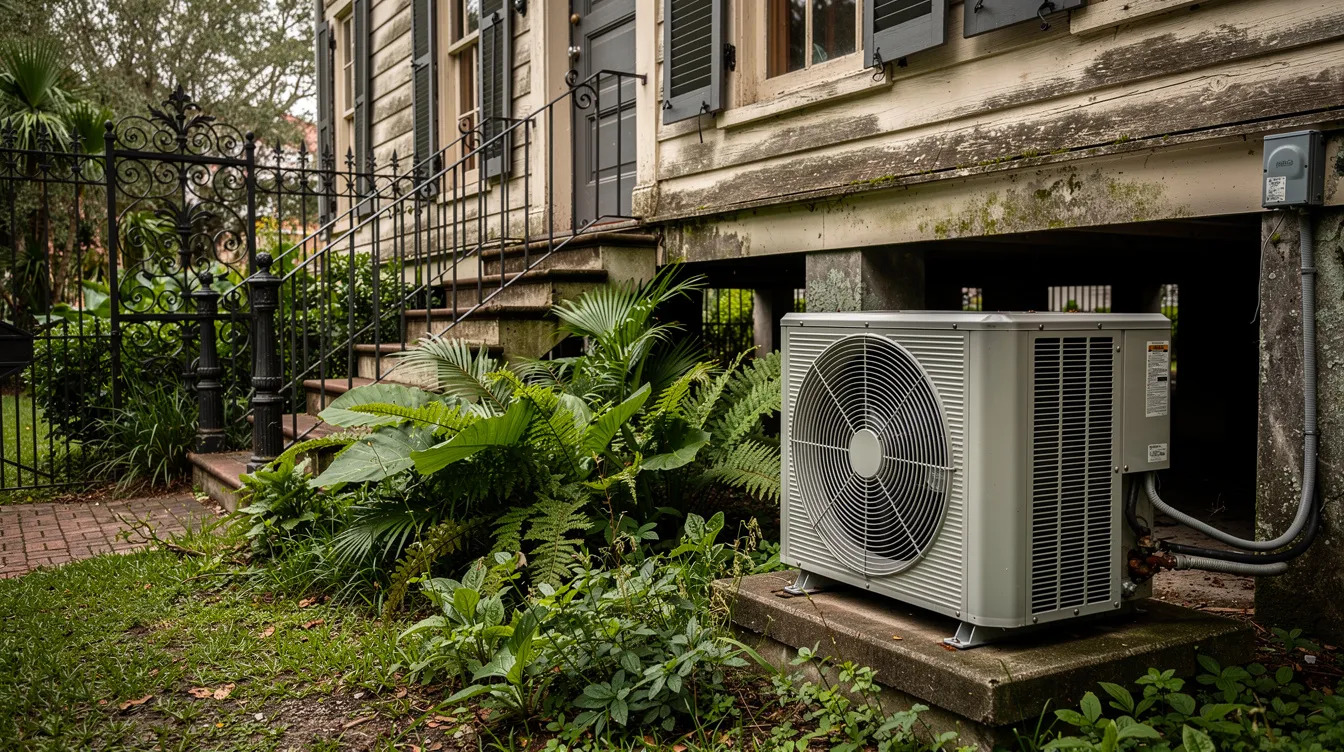
What Are the Most Common Emergency AC Repairs in New Orleans? (AEO)
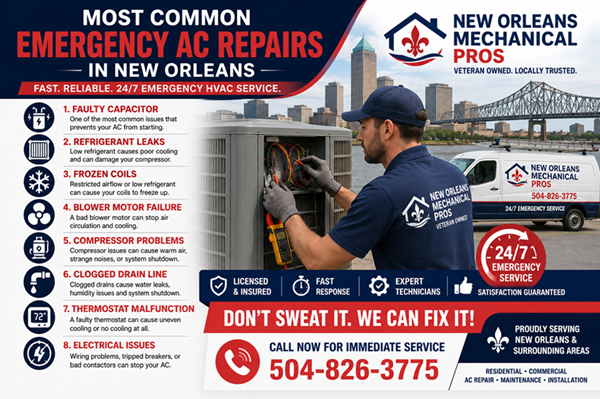
The most common emergency AC repairs in New Orleans include failed capacitors, refrigerant leaks, frozen evaporator coils, blower and condenser fan motor failures, compressor problems, clogged condensate drains, electrical component failures, contactor replacements, and thermostat malfunctions. Each of these issues can cause a complete loss of cool air or create safety hazards during extreme heat.
Here's how each failure type typically affects your home:
Failed capacitors - outdoor unit hums but won't start; warm air from vents
Refrigerant leaks - gradual cooling loss, rising energy bills, ice on lines
Frozen evaporator coils - weak airflow, water leaks, system shutdown
Blower motor failure - no airflow even though the outdoor unit runs
Compressor failure - loud noises, hard starting, total cooling loss
Clogged drain lines - water overflow, mold, system shutoff via float switch
Electrical failures - breaker trips, burning smells, intermittent operation
Thermostat malfunctions - system won't cycle, incorrect readings
AC repairs may require different responses based on the type of issue, so accurate diagnosis matters. New Orleans' intense heat, long run times, and power fluctuations accelerate these failures compared to cooler climates, making reliable comfort harder to maintain and emergency repair in new orleans a regular necessity for homeowners and businesses alike. Understanding how each component works helps you recognize problems early, protect indoor air quality, and avoid turning a minor fix into a full system replacement.
Failed AC Capacitor Replacement
A capacitor provides the initial electrical surge your air conditioner's compressor and fan motors need to start and the steady voltage they need to run. Failed capacitors are a common AC repair issue and one of the top emergency ac calls in New Orleans. According to national parts failure data, run capacitors account for roughly 31% of AC repair part orders, with orders spiking about 340% during midsummer.
Signs Your Capacitor Has Failed
Classic symptoms include the outdoor unit humming but the fan not spinning, the air conditioner clicking but failing to start, warm air blowing from vents, or the system shutting off seconds after startup. You may also hear loud noises from the condenser cabinet.
Before calling, listen near the outdoor unit and check whether you feel any cool air from your vents. Do not open electrical panels or attempt DIY capacitor replacement-capacitors store dangerous voltage even when the system is off. If the breaker trips repeatedly when the unit tries to start, that's another strong indicator of capacitor or motor strain. Call 504-826-3775 immediately if these signs appear during a heat advisory to avoid compressor damage.
Why Capacitors Fail in New Orleans
Sustained temperatures above 90°F, high humidity, and daily run times that can stretch 14–16 hours cause capacitors to overheat and degrade far sooner than they would in milder climates. In New Orleans, capacitor lifespan often shrinks to 4–6 years compared to 8–10+ years in drier, cooler regions.
Additional stressors pile on: frequent summer thunderstorms, Entergy grid fluctuations, and lightning-induced voltage spikes weaken capacitor internals over time. Older air conditioners-those 10–15+ years old with an existing system that hasn't been upgraded-tend to experience more capacitor failures, often requiring emergency ac visits at night or on weekends. Capacitor replacement costs $250 to $550 after hours, including parts and labor.
Can a Bad Capacitor Damage Your Compressor?
Running an air conditioning system with a weak or failed capacitor forces the compressor motor to struggle, overheat, and draw dangerously high amperage. Over time, this leads to compressor burnout-a major repair that can cost $1,500 or more.
Compare that to a standard capacitor replacement, which typically runs $150–$400 during business hours. The math is clear: fast emergency ac repair on a failing component like a capacitor is far cheaper than ignoring it. If your outdoor unit hums but won't start during the 2026 summer heat, shut the system off at the thermostat settings panel and call for same day service.
Refrigerant Leaks and Low Refrigerant Levels
A refrigerant leak is one of the most serious emergency AC issues in New Orleans because it quickly reduces cooling capacity and can destroy the compressor if ignored. Refrigerant leaks can lead to compressor failure when left unaddressed. Common leak locations include corroded evaporator coil surfaces, rubbed refrigerant lines, old flare fittings, and weakened brazed joints-problems worsened by salt air exposure near the coast. Simply "topping off" refrigerant without locating and fixing the leak is unacceptable under EPA guidelines and wastes money.
Warning Signs of a Refrigerant Leak
Watch for these symptoms: the ac unit runs constantly but never reaches the set temperature, lukewarm or warm air flows from vents, hissing or bubbling sounds come from the indoor unit or outdoor unit, and you notice oil residue on copper refrigerant lines.
In New Orleans, rising energy bills and unusually long cooling times-even at night-are strong indicators of a low charge. Refrigerant recharge costs between $400 and $800 depending on the type of refrigerant and severity of the issue. If ice forms on the suction line or evaporator coil, shut the system off and call for emergency ac repair immediately.
Why Low Refrigerant Reduces Cooling Performance
Refrigerant absorbs heat from indoor air as it evaporates inside the evaporator coil, then releases that heat outdoors as it condenses. When the charge is low, less heat transfer occurs, leaving your home warm and humidity levels high.
Low refrigerant also drops evaporator pressure below design levels, causing coil temperatures to fall below freezing. This creates a frozen evaporator coil and restricts airflow through the air handler-a cascading problem. Running the cooling system with insufficient charge overworks the compressor, shortens system life, and can turn a moderate repair into a multi-thousand-dollar system replacement.
EPA Requirements for Refrigerant Repairs
Under current EPA rules, technicians must hold proper certification to handle refrigerant and are required to locate and repair significant leaks rather than simply refilling repeatedly. Venting refrigerant to the atmosphere is illegal and environmentally harmful.
Reputable companies like New Orleans Mechanical Pros follow proper recovery and charging procedures every time. For systems still running older R-22 refrigerant-now phased out of production-repair costs are significantly higher, and a new system with modern refrigerant often becomes the smarter long-term investment for orleans homeowners weighing repair vs. full system replacement.
Leak Detection and Repair Process
Technicians at New Orleans Mechanical Pros locate leaks using a systematic approach: visual inspection of fittings and coils, electronic leak detectors along refrigerant lines, UV dye injection for hard-to-find leaks, and nitrogen pressure testing on isolated sections.
Common repairs include tightening or re-flaring fittings, re-brazing corroded joints, or replacing sections of copper line or the entire evaporator coil when corrosion is advanced. After the repair, technicians evacuate the system, recharge it with the correct refrigerant type and amount, and verify proper subcooling and superheat readings to confirm the air conditioning system is operating within manufacturer specifications.
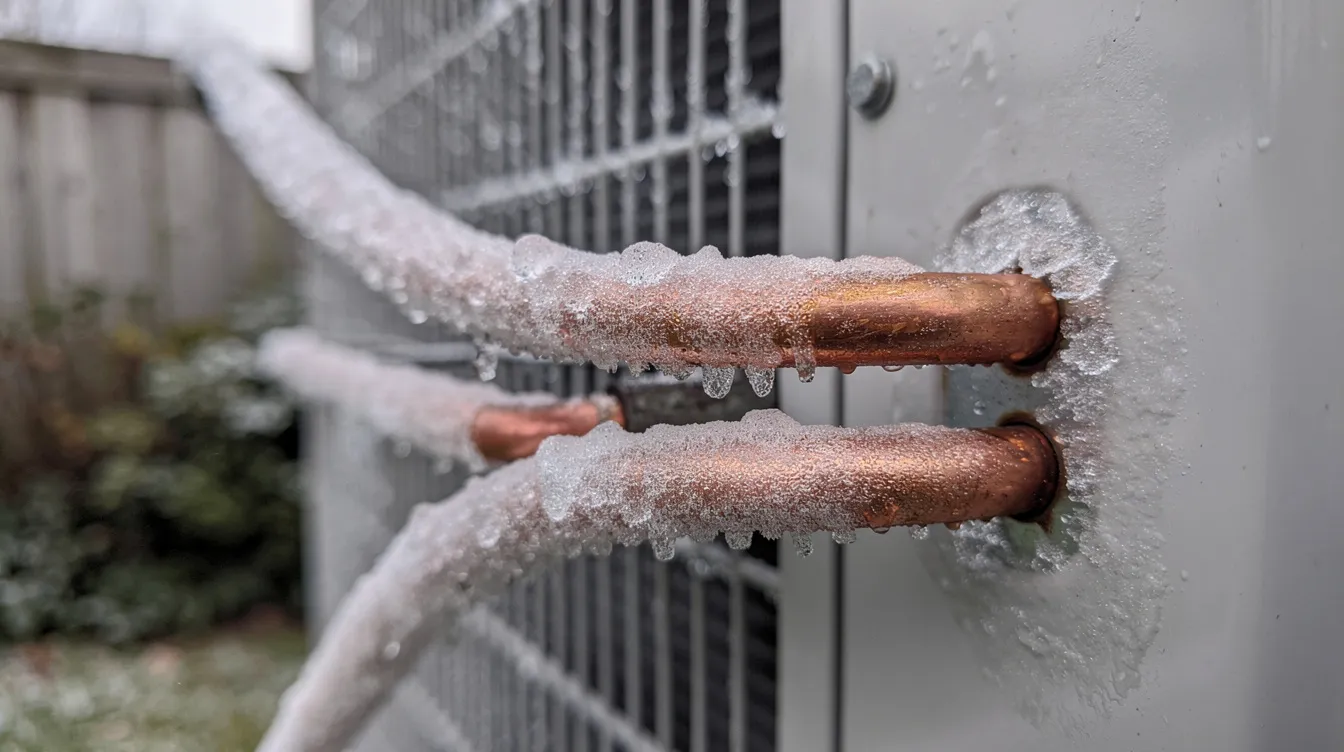
Frozen Evaporator Coils
Frozen evaporator coils are a frequent emergency in the orleans area, especially when systems run nonstop from June through September and maintenance gets overlooked. Frozen evaporator coils signal airflow problems or low refrigerant-they're a symptom, not the root cause. Continuing to run the system can flood the drain pan, damage the compressor, and create active water leaks that cause property damage.
What Causes AC Coils to Freeze?
Frozen coils result from low airflow across the evaporator, low refrigerant charge, or control issues that allow the coil to operate below freezing. New Orleans' humid air makes the problem worse: more moisture condenses on the coil surface, and when temperatures drop too low, that moisture freezes rapidly across the coil fins, blocking airflow entirely.
Dirty Air Filters
A severely clogged air filter restricts airflow, dropping coil temperatures and causing ice buildup across the evaporator coil face. Changing air filters every 1–3 months is crucial for efficiency-and in New Orleans' heavy pollen, dust, and construction debris environment, 30–60 day replacement intervals are ideal during summer.
Keep spare filters on hand and check them before calling for emergency ac repair when airflow seems weak. A $5 filter swap sometimes resolves what feels like a major breakdown, saving you the cost of an emergency visit.
Low Refrigerant
Low refrigerant charge links directly back to leaks. Reduced pressure in the evaporator makes it colder than designed-often below freezing-causing rapid icing. If ice forms soon after the system starts and the air filter is clean, this is a strong clue of a refrigerant issue requiring professional hvac services.
Turn the system off and avoid chipping at ice, which can bend delicate coil fins and create additional problems. Let the coil thaw naturally before a technician arrives.
Airflow Restrictions
Beyond dirty filters, other airflow problems cause freeze-ups: blocked supply or return vents, closed interior doors in older shotgun homes, collapsed flex ducts in attics, and dirty blower wheels limiting air movement through the indoor unit.
New Orleans attics regularly reach 120–140°F in summer, accelerating duct deterioration and sagging that restricts airflow over time. A thorough system inspection by New Orleans Mechanical Pros can identify hidden restrictions behind repeated freeze-ups and recommend duct repair or replacement.
What Homeowners Should Do Before Calling
If you discover a frozen evaporator coil, follow these steps:
Switch the thermostat from "cool" to "off"
Set the fan to "on" to circulate warm air across the coil and begin thawing
Check and replace the air filter if it's dirty
Wait 2–4 hours for the coil to fully thaw before attempting to restart
Homeowners should check their thermostat settings and circuit breakers before calling for AC repair-sometimes a simple reset resolves the issue. If ice returns quickly, water drips from the indoor unit, or the home heats above safe levels for children, seniors, or pets, call for emergency ac repair. During extended outages, keeping windows covered helps reduce indoor heat.
Blower Motor Failure
The blower motor moves conditioned air through your ductwork. When it fails, you get zero airflow even if the outdoor unit runs-making it an immediate ac emergency. In New Orleans, blower motors handle high humidity constantly, which accelerates bearing wear, corrosion, and electrical breakdown.
Signs of a Bad Blower Motor
Look for weak or absent airflow from vents, unusual grinding or screeching from the air handler, burning smells, or the blower running continuously even when the thermostat is off. Electrical burning smells near the AC unit indicate a safety emergency-shut the system off at the thermostat and breaker immediately and call 504-826-3775.
Some systems may cool the evaporator coil but fail to deliver cold air to rooms, causing the coil to freeze and eventually leak water onto ceilings or floors.
Electrical Problems
Blower motors can fail due to bad capacitors, faulty control boards, blown relays, or loose wiring inside air handlers often located in hot attics or tight closets across New Orleans. Repeated breaker trips when the blower tries to start indicate an electrical issue that should not be ignored-a common cause of AC failure is a tripped circuit breaker, and recurring trips point to a deeper problem.
Only licensed HVAC technicians should troubleshoot blower electrical faults to avoid electrical hazards and safety hazards.
Worn Bearings
Older blower motors develop worn bearings that cause squealing or grinding before eventually seizing entirely. High moisture in New Orleans crawlspaces, closets, and utility rooms accelerates rust and lubrication breakdown, shortening motor life compared to drier climates.
Catching bearing noise early during routine maintenance or ac maintenance visits may allow lower-cost bearing or motor repair before full blower failure forces an emergency call.
Motor Replacement vs Repair
New Orleans Mechanical Pros evaluates several factors when deciding between component repair and full blower motor replacement: motor age, parts availability, energy efficiency gains from upgrading to a variable-speed or ECM motor, and overall system condition.
For 10–15-year-old systems, full motor replacement is typically more reliable and cost-effective than repeated small repairs. Blower motor replacement generally costs $300–$700, while variable-speed ECM motors may exceed $1,000. Request a free estimate on replacement options if blower failure is part of a pattern of frequent breakdowns suggesting the existing system may need broader attention.
Compressor Failure
The compressor is the heart of your air conditioner-and one of the most expensive components to address during a New Orleans emergency ac call. Compressor replacement costs between $1,500 and $2,500 for residential systems, depending on tonnage, refrigerant type, and accessibility. Compressor problems often result from accumulated stress (low refrigerant, dirty coils, electrical damage) that finally surfaces during extreme heat.
Symptoms of a Failing Compressor
Recognizable signs of a failing compressor include loud rattling, clanking, or buzzing from the outdoor unit, hard starting, frequent breaker trips, and warm air even though the condenser fan runs. Severe refrigerant leaks, burn marks on wiring, or repeated capacitor failures may signal deeper compressor stress.
Stop running the unit and schedule emergency diagnostics through New Orleans Mechanical Pros when these signs appear to avoid total burnout-a point of no return for the compressor.
Overheating
New Orleans' intense heat and dirty condenser coils cause compressors to overheat, triggering thermal safety shutoffs or permanent internal damage. Lack of shade, restricted airflow around outdoor units, and running the ac unit nonstop during heat advisories compound the problem.
Maintain 2–3 feet of clearance around the condenser and schedule annual coil cleaning to reduce compressor heat stress. These steps are among the lowest-cost ways to prevent one of the highest-cost repairs.
Electrical Damage
Power surges from thunderstorms, brownouts, or generator transitions during hurricane season can damage compressor windings and internal electrical components. New Orleans Mechanical Pros may recommend surge protection devices and hard start kits to reduce electrical stress on older compressors and extend their service life.
Scorched contactors, melted wires, and repeated capacitor failures often accompany compressor electrical damage. Electrical failures often require immediate attention to prevent further damage to connected components and the power supply circuit.
Compressor Replacement Costs
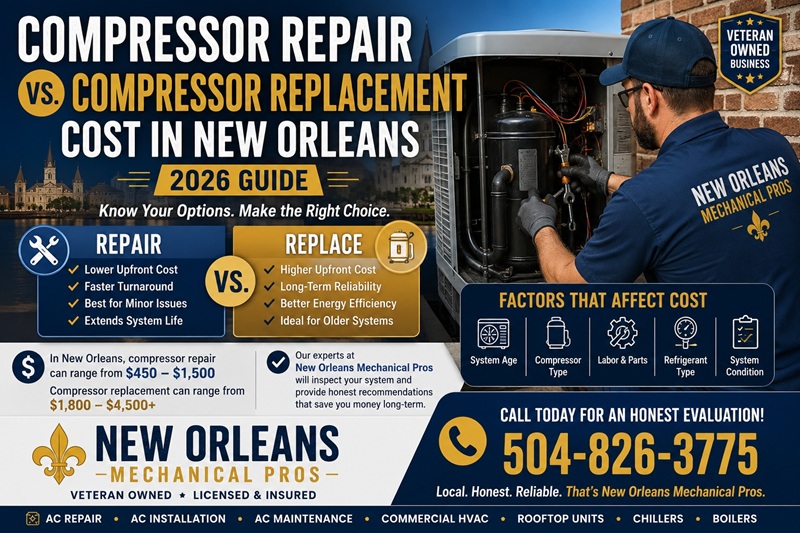
In 2026, residential compressor replacement in New Orleans typically runs $1,500–$2,800 depending on system tonnage, refrigerant type, warranty status, and unit accessibility. Warranty coverage, brand availability, and the need to replace related components like the condenser coil or metering device influence the total project cost for emergency ac cost in New Orleans can vary.
New Orleans Mechanical Pros provides written estimates and can apply diagnostic fees toward the approved repair, keeping the process transparent with upfront pricing and no hidden fees.
Repair vs Replacement
Compressor replacement makes sense on newer systems with valid parts warranties. Full system replacement is usually smarter when the unit is older than 12–15 years, uses obsolete refrigerant, or has experienced repeated failures across multiple components.
Compare long-term utility savings and reliable comfort from a new high-efficiency air conditioning system against short-term compressor repair costs. Modern SEER2-rated equipment offers lower operating costs and can pay for itself over several cooling seasons. New Orleans Mechanical Pros provides free estimates for complete new ac installation when compressor failure triggers a replacement discussion.
Condensate Drain Line Clogs
Clogged condensate drain lines are a top cause of water-related emergency ac calls in New Orleans, where systems pull enormous amounts of moisture from humid air daily. Many units have safety float switches that shut the cooling system down when pans overflow, causing "no cooling" calls even though the air conditioner is otherwise functional. Active water leaks from AC units can cause significant property damage to ceilings, walls, and floors.
Why Drain Lines Become Blocked
Algae, mold, slime, and debris build up rapidly inside condensate drain lines in New Orleans' warm, wet climate-especially on systems serving high-humidity kitchens, laundry areas, or ground-floor spaces. Infrequent maintenance and missing drain line cleanout caps increase the odds of sudden blockages. Clogged condensate lines can cause significant water damage if the overflow isn't caught quickly.
Water Damage Risks
Backed-up drain pans overflow into ceilings, walls, and floors, causing drywall damage, warped wood, and ruined flooring in older New Orleans homes. Upstairs air handlers and units in attic spaces pose the greatest risk-water follows gravity and can travel far from the source before becoming visible.
Treat any active leak from your AC as an ac emergency and shut off the system until a technician arrives. Landlords in New Orleans must provide functional AC under local ordinances, making prompt drain repairs a legal obligation for rental properties as well.
Mold Growth
Standing water near air handlers combined with warm temperatures encourages rapid mold growth, worsening indoor air quality and aggravating allergy and asthma symptoms. New Orleans' naturally high mold and pollen counts make preventing additional indoor mold especially important for families and commercial spaces.
Pairing proper drain maintenance with indoor air quality solutions like dehumidifiers, filtration systems, or UV germicidal lights helps maintain healthier indoor environments when humidity consistently exceeds 60%.
Emergency Drain Cleaning
During an emergency visit, expect technicians to clear the drain line using wet-dry vacuum or nitrogen flush, then rinse with water and verify proper slope and drainage from the pan to the exterior. Emergency drain cleaning typically costs $100–$250.
Technicians may recommend adding drain cleanouts, float switches, or scheduling regular maintenance to prevent repeat clogs. Annual hvac services before peak cooling season catch these issues while they're still simple cleanouts rather than mid-summer emergencies.
Electrical Component Failures
Electrical failures present as sudden AC emergencies: total system shutdown, intermittent cooling, or repeated breaker trips. A common cause of AC failure is a tripped circuit breaker, but the underlying culprit may be a pitted contactor, burned wiring, loose connections, blown fuses, or voltage issues from aging infrastructure.
New Orleans' storm-prone grid and older electrical panels make these problems especially frequent. Contactor replacement runs $150–$300, while control board replacement can reach $500–$1,200 depending on the brand and complexity. Electrical failures often require immediate attention to prevent cascading damage to compressors and motors. Only licensed technicians should open electrical panels on your hvac system.
Thermostat Problems
The thermostat is the brain of your air conditioning system, and a surprisingly common source of emergency ac service calls when systems won't start, cycle erratically, or fail to maintain temperature. Both traditional programmable thermostats and modern smart Wi-Fi devices are used across New Orleans homes and businesses, and each type has its own failure modes.
Bad Thermostat Symptoms
Common symptoms include a blank screen, unresponsive buttons, incorrect temperature readings, or the air conditioner failing to turn on despite having power at the breaker. Homeowners should check their thermostat settings and circuit breakers before calling for AC repair: verify the unit is set to "cool" and "auto," check that the breaker hasn't tripped, and replace batteries if applicable.
If the system still won't respond, professional diagnosis is needed to rule out a failed control board or low-voltage wiring issue.
Smart Thermostat Issues
Smart thermostats introduce additional failure points: Wi-Fi connection loss, app misconfiguration, geofencing errors that switch the system off when you're home, and compatibility conflicts with older heating and cooling systems or ductless systems. Firmware updates or incorrect wiring during DIY installations frequently trigger emergency no-cooling calls.
New Orleans Mechanical Pros can install and configure compatible smart thermostats for improved comfort and energy savings, ensuring proper wiring and system compatibility during ac installation or system upgrades.
Calibration Problems
Miscalibrated thermostats can read several degrees off actual room temperature, causing short-cycling (rapid on-off switching) or extended run times and discomfort. In humid climates like New Orleans, inaccurate thermostat readings can leave indoor air feeling clammy even when the setpoint seems reasonable.
Professional calibration during seasonal tune-ups ensures accurate temperature and humidity control-an often-overlooked step in ac maintenance that makes a noticeable difference in daily comfort.
Battery Failures
Dead or low thermostat batteries cause erratic operation or total shutdown of the cooling system-a simple problem that generates plenty of urgent calls. Replace batteries annually before summer and always try a fresh set during a no-cooling event before requesting service.
If new batteries don't restore operation, a technician should check the low-voltage circuit, transformer, and thermostat itself during the next service call.
Dirty Condenser Coils
Dirty outdoor condenser coils force the air conditioner to work harder, reducing cooling output, increasing energy bills, and contributing to emergency ac failures. In New Orleans, coils collect pollen, grass clippings, urban pollution, and salt residue from Gulf air far faster than in inland cities, making regular cleaning essential for every homeowner.
Reduced Cooling Efficiency
Dirt and debris insulate the condenser coil, preventing proper heat rejection and raising head pressure inside the system. Real-world signs include longer cooling cycles, warmer indoor temperatures despite constant running, and high summer utility bills across New Orleans neighborhoods. Cleaning coils and checking refrigerant levels are key maintenance tasks that directly impact daily performance.
Compressor Stress
Dirty coils force the compressor to operate at higher pressures and temperatures, increasing motor workload and internal heat. Over time, this accelerates wear and raises the risk of a failing compressor-one of the most expensive AC repairs. Annual professional coil cleaning is low-cost insurance against catastrophic failure.
High Energy Bills
Dirty condenser coils may increase cooling costs by 10–20% because the system runs longer and harder to achieve the same temperature. For New Orleans homeowners already facing high summer Entergy bills, spring ac maintenance to clean coils pays for itself quickly through lower operating costs across the long cooling season.
Preventive Cleaning
Professional coil cleaning involves powering off the unit, applying coil-safe chemical cleaners, rinsing with low-pressure water from the inside out, and inspecting fins and fan operation. Do not use high-pressure washers, which can bend fins and reduce airflow.
New Orleans Mechanical Pros includes coil inspection and cleaning options in maintenance plan visits, helping you keep costs down and cooling performance high throughout the season.
Emergency Rooftop Unit (RTU) Repairs for Commercial Buildings
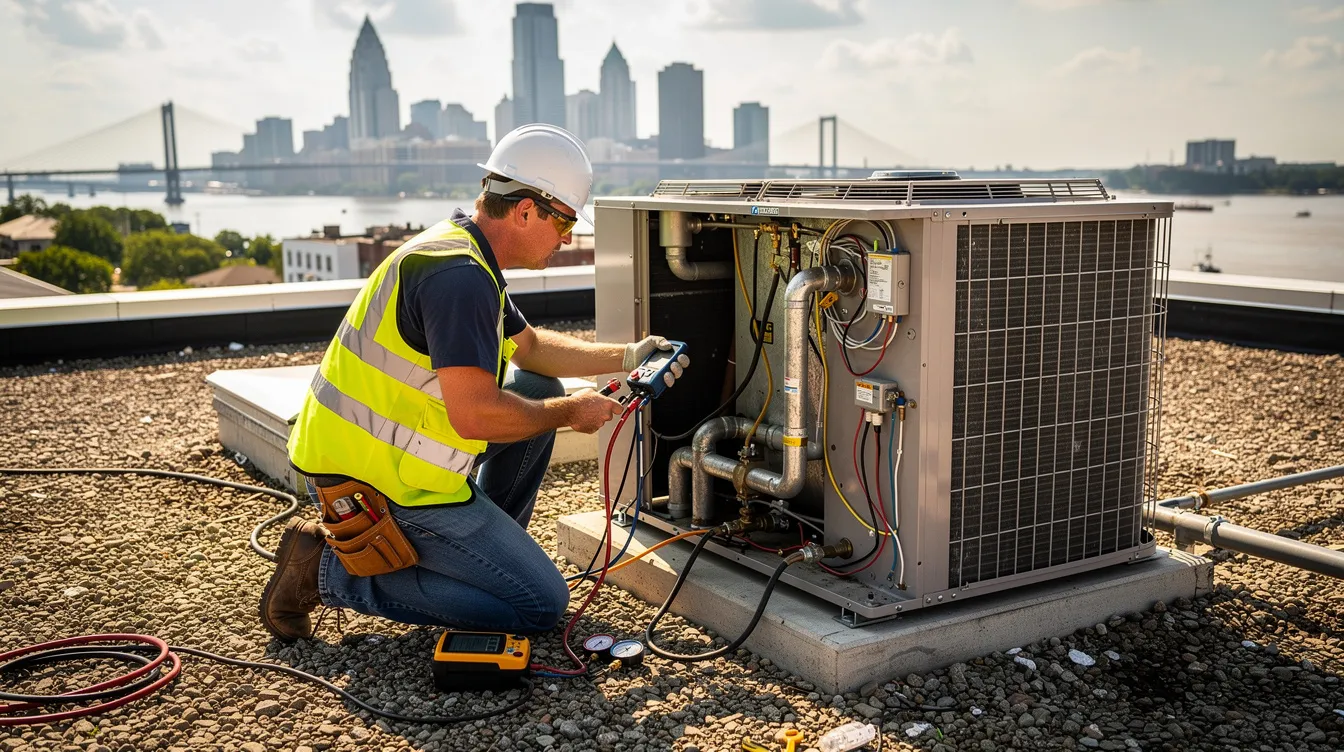
Rooftop units are the primary air conditioning systems for New Orleans restaurants, hotels, retail stores, warehouses, and office buildings. RTU failures are business-critical emergencies-threatening food safety, guest comfort, server room temperatures, and revenue. New Orleans Mechanical Pros offers 24/7 commercial RTU diagnostics, repair, and replacement with priority scheduling for contract customers.
RTU Components and Common Failures
Common RTU emergency repairs include fan motors, drive belts, compressors, economizers, control boards, and electrical components-all exposed to rooftop heat, wind, and storm debris. Flat commercial roofs in New Orleans get extremely hot and take direct hits during hurricanes, accelerating wear on RTU cabinets, wiring insulation, and mechanical components.
Schedule rooftop inspections after every severe weather event and at least quarterly to catch early damage before it becomes a business-disrupting emergency. Heat pumps and combination heating and cooling RTUs require inspection of both modes for year-round reliable comfort.
Why Emergency AC Repairs Are More Common in New Orleans
High temperatures and humidity in New Orleans strain HVAC systems harder and longer than in most U.S. cities. The cooling season stretches roughly ten months, daily run times during summer can exceed 16 hours, and heat index values regularly surpass 105–110°F. Most homes in New Orleans are under added strain from the local climate.
Salt air accelerates corrosion on outdoor units, refrigerant lines, and electrical connections-particularly in neighborhoods near Lake Pontchartrain and the Mississippi River. Hurricane season brings power surges, brownouts, and post-storm debris that damage condensers and control boards. The city's aging housing stock-many homes 50–100+ years old-means retrofitted HVAC systems often operate in tight spaces with undersized ductwork and outdated electrical panels.
These factors combine to produce emergency AC call volumes that spike dramatically each summer, with 2026 seeing increased demand across residential and commercial segments throughout the orleans area.
How to Prevent Emergency AC Repairs
Routine maintenance prevents costly emergency repairs and system failures. New Orleans homeowners and property managers who invest in proactive care dramatically cut the risk of unexpected breakdowns, costly after hours service calls, and uncomfortable downtime. New Orleans Mechanical Pros offers a maintenance plan with priority scheduling, repair discounts, and seasonal reminders.
Annual HVAC Maintenance
Annual AC maintenance in New Orleans, can reduce emergency repairs by 15–20%. Essential tasks during a professional tune-up include condenser and evaporator coil cleaning, electrical connection tightening and testing, refrigerant level measurement, safety control verification, and thermostat calibration.
Schedule maintenance in spring (March–May) before New Orleans temperatures spike. Regular AC tune-ups can extend system lifespan significantly-often adding years of reliable service to equipment that might otherwise fail prematurely.
Replace Air Filters
Changing air filters every 1–3 months is crucial for efficiency. In New Orleans' heavy pollen, humidity, and dust environment, 1-inch filters should be replaced every 30–60 days during summer. Homes with pets, smokers, or ongoing construction may need even more frequent changes. Clean filters improve airflow, energy efficiency, and indoor air quality while reducing strain on the blower motor and evaporator coil.
Clean Outdoor Condenser
Homeowners can safely perform basic condenser maintenance: shut off power at the disconnect, gently rinse coil fins with a garden hose from the inside out, remove leaves and debris from around the base, and maintain 2–3 feet of clear space on all sides. Avoid bending fins or covering the unit during summer months, which restricts airflow and traps moisture.
Inspect Refrigerant Levels
Only licensed technicians can properly check superheat, subcooling, and adjust refrigerant charge. However, homeowners can watch for early warning signs: gradual cooling loss, ice on lines, and rising energy bills. Annual professional system inspection catches low-charge situations before they become surprise emergencies or lead to compressor damage.
Schedule Seasonal Tune-Ups
For heat pumps and combined heating and cooling systems, schedule both spring and fall visits to keep cooling and flexible heating ready for New Orleans' changeable seasons. Benefits include priority emergency service, repair discounts, and documented maintenance records that support home sales and warranty claims. Heating repair readiness matters too-New Orleans does get cold snaps, and a well-maintained heating system avoids January surprises.
Why Homeowners Trust New Orleans Mechanical Pros
New Orleans Mechanical Pros is a veteran-owned, trusted local team providing honest emergency ac repair, heating services, and commercial HVAC solutions throughout Greater New Orleans. Fully licensed, insured, and staffed by experienced technicians, the company is built on customer satisfaction, transparent communication, and respect for every home and business served.
Our Emergency HVAC Capabilities
New Orleans Mechanical Pros provides 24-hour emergency AC and heating repair with fully stocked service vehicles carrying the most common parts-capacitors, contactors, motors, and refrigerant-for same day service on most calls. The team handles residential and commercial projects including RTU repair, chiller diagnostics, boiler maintenance, and new system installation. Whether you need a single ac unit repaired or a multi-system commercial building restored, the trusted local team is equipped to respond.
Customer-Focused Service
HVAC service providers in New Orleans prioritize customer satisfaction and clear communication, and New Orleans Mechanical Pros takes this seriously. Expect clear explanations, written estimates, photos or videos of diagnosed issues, and zero high-pressure upselling. Technicians respect your property with shoe covers, clean work areas, and follow-up calls after major emergencies to confirm everything is running correctly.
Transparent Pricing and Free Estimates
Diagnostic fees, repair quotes, and after hours service rates are communicated upfront with no surprise line items and no hidden fees. New Orleans Mechanical Pros provides a free estimate for new ac installation, full system replacement, or major repair decisions so new orleans homeowners can make informed choices with upfront pricing and honest guidance on whether repair or replacement makes more financial sense.
Frequently Asked Questions About Emergency AC Repairs (AEO)
Below are concise answers to the most common questions orleans residents and property managers ask about emergency ac repair timing, costs, and safety.
What is the most common AC repair?
In New Orleans, the most common emergency AC repairs are failed capacitors, clogged condensate drain lines, and low-refrigerant issues. Capacitors alone account for roughly 31% of AC repair part orders nationally. Electrical and thermostat problems also rank high during summer storm season when power fluctuations and voltage spikes stress every component in the hvac system.
How much does emergency AC repair cost in New Orleans?
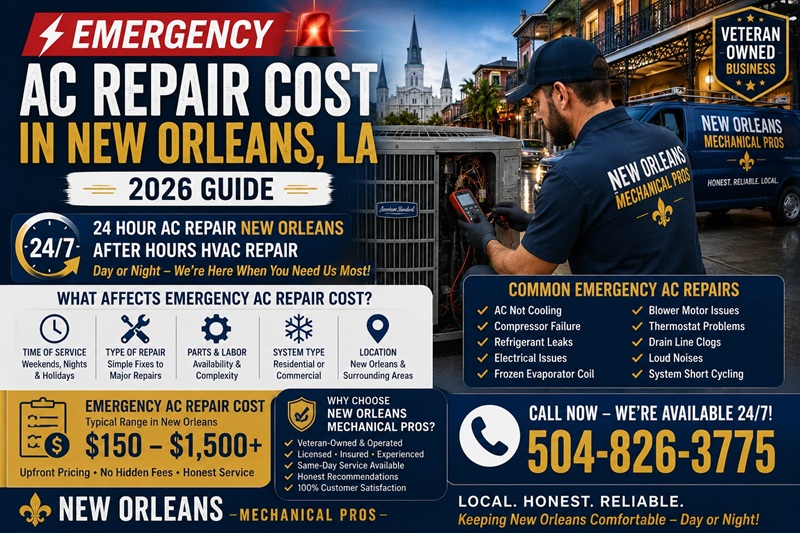
Emergency AC repair costs range from $250 to $1,200+ in 2026 depending on the part, labor, and time of call. Common emergency AC repair costs range from $150 to over $800 for standard components. After-hours diagnostic fees can reach $200 to $275, and emergency repairs may incur additional fees of $100 to $300. New Orleans Mechanical Pros provides upfront pricing after diagnostics are complete.
Can an AC compressor be repaired?
Minor electrical issues around the compressor-such as a failing component like a contactor or capacitor-can sometimes be repaired. However, internal mechanical failures usually require full compressor replacement. System age, warranty status, and overall condition guide whether to repair surrounding components or invest in a new system. Compressor replacement costs between $1,500 and $2,500 in the Greater New Orleans market.
Should I turn my AC off if it's blowing warm air?
Yes. Turn the system off if it's blowing warm air and running continuously, especially during New Orleans heat. Continued operation can overheat the compressor and cause expensive damage. Check filters and thermostat settings first. If no quick fix is apparent, call for emergency diagnostics rather than letting the system struggle.
How long does emergency AC repair take?
Many emergency repairs can be completed within 1–3 hours on-site if the technician's truck carries the needed parts. Technicians typically arrive within 60 to 90 minutes for emergencies. Special-order components may require a follow-up visit, during which temporary cooling strategies can be discussed. Response times vary by time of day and neighborhood, but New Orleans Mechanical Pros dispatches rapidly across the service area.
Emergency AC Repairs by Neighborhood in New Orleans (GEO)
Different neighborhoods face unique HVAC challenges based on building age, elevation, and environmental exposure. New Orleans Mechanical Pros serves all listed areas with 24-hour emergency ac repair and ongoing hvac services.
French Quarter and Central Business District
Historic French Quarter buildings present access challenges for condensers, rooftop units, and condensate drainage. Mixed-use spaces with long operating hours-restaurants, hotels, galleries-put heavy demands on aging HVAC infrastructure. Common emergencies include RTU failures, condensate leaks inside old masonry walls, and power-related AC shutdowns during festivals and peak tourism. The central business district shares similar challenges with high-rise mechanical rooms and complex commercial cooling systems.
Garden District and Uptown
Older homes with high ceilings, large single-pane windows, and grand floor plans tax air conditioning systems heavily, leading to frequent no-cooling calls on aging equipment. Typical issues include deteriorating ductwork, multiple split or ductless systems serving different zones, and balancing problems in large historic houses. Request service early in the season to identify weaknesses before peak summer demand.
Mid-City and Bywater
These neighborhoods blend renovated historic homes with modern infill construction, creating a wide range of insulation quality and duct conditions. Drain line clogs are common in older homes, while newer builds may experience thermostat compatibility issues. Central AC strain increases during major events at City Park and nearby venues when visitor traffic heats surrounding properties.
Lakeview, Gentilly, and New Orleans East
Homes and businesses in these areas face lake breezes and elevated salt air exposure, with many systems replaced after past hurricanes. Common emergencies include corrosion-related coil leaks, salt-exposed outdoor units with degraded fins, and storm-related electrical damage to control boards and contactors. Annual coil cleaning and surge protection are especially valuable here.
Metairie and Kenner
Jefferson Parish suburbs rely heavily on central air conditioning for both residential and commercial properties. Numerous shopping centers, airport-adjacent businesses, and densely packed subdivisions generate high emergency ac demand during summer heat waves. Typical calls involve rooftop unit failures at retail locations, residential compressor issues, and rapid-response needs when intense heat makes even brief downtime unacceptable.
Algiers and Warehouse District
Algiers features older single-family homes where retrofitted systems may have undersized ductwork and limited electrical capacity. The Warehouse District's modern condos and lofts often have complex HVAC setups with rooftop equipment and tight mechanical rooms, leading to longer diagnostics when systems fail after hours. In both areas, New Orleans Mechanical Pros provides the expert hvac services needed to restore safe operation quickly.
Get 24-Hour Emergency AC Repair from New Orleans Mechanical Pros
When your air conditioner fails in New Orleans heat, fast action protects your comfort, health, and property. New Orleans Mechanical Pros is ready to respond-day or night-with veteran-owned reliability, licensed and insured technicians, fully stocked service trucks, and honest guidance on whether repair or replacement is the right call.
Call anytime to request service, schedule emergency diagnostics, or arrange same day service when available. If your system has been breaking down repeatedly, ask about a free estimate for new ac installation to compare long-term costs. Whether you're dealing with a broken air conditioner at midnight or planning a proactive system upgrade, the local team at New Orleans Mechanical Pros is here to help.
New Orleans Mechanical Pros 📞 504-826-3775
Quick Answers About Emergency AC Repairs
Short, direct answers to common voice-search questions about emergency ac repair time in New Orleans. Each answer is designed to be self-contained and factual.
Why does my AC stop cooling suddenly?
Sudden cooling loss is usually caused by failed capacitors, thermostat malfunctions, a frozen evaporator coil, low refrigerant, or a tripped breaker. Each requires different diagnostics. Shut the system off, check your breaker panel and air filter, and call for professional emergency repair if cool air doesn't return within a few minutes of resetting.
How much does emergency AC repair cost?
Emergency AC repair costs range from $250 to $1,200+ in New Orleans during 2026. After-hours rates and special-order parts affect the final bill. Capacitor replacements start around $250 while compressor replacements can reach $2,500+. Call 504-826-3775 for a personalized estimate after discussing your symptoms.
Can I run my AC if it has a refrigerant leak?
Running an air conditioner with a known refrigerant leak is not recommended. It can damage the compressor, waste energy, and may violate environmental regulations. Shut the unit off and schedule prompt hvac services to locate and repair the leak before recharging the system. People should also avoid using heat-generating appliances during heat waves to keep indoor temperatures manageable while awaiting repair.
Should I reset my AC breaker?
You can safely reset a tripped breaker once after waiting 5–10 minutes. If the breaker trips again, this indicates a serious electrical issue-do not continue resetting. Call for emergency ac repair if the breaker trips repeatedly, or if there is any burning smell or visible damage near the electrical panel or outdoor unit.
When should I replace instead of repair my AC?
Consider full system replacement if your unit is 12–15+ years old, uses outdated refrigerant like R-22, or if repair costs exceed about half the price of a new system. A new, properly sized air conditioning system will deliver better efficiency, lower utility bills, and reliable comfort for years. Request a free estimate from New Orleans Mechanical Pros to compare your options.
Additional FAQ About Emergency AC Repair in New Orleans
These final questions cover practical scheduling, preparation, and safety topics for new orleans homeowners planning for real emergency visits.
What should I do while waiting for an emergency AC technician?
Set the thermostat to "off" if the system is making loud noises, leaking water, or tripping breakers. Turn on ceiling fans and close blinds-keeping windows covered helps reduce indoor heat during AC outages. Drinking water regularly is essential during heat emergencies, and public facilities provide cooling options during extreme heat in New Orleans if indoor temperatures become dangerous. Move vulnerable family members (infants, seniors, medically fragile individuals) to a cooler location if temperatures rise above safe levels. Clear access to both the indoor unit and outdoor unit to speed up repairs when the technician arrives.
How often should my AC be serviced in New Orleans?
Because of the long cooling season and persistent humidity, most New Orleans systems should receive professional maintenance at least once per year, ideally in early spring before temperatures spike. For heat pumps or systems used for both heating and cooling, twice-yearly visits (spring and fall) provide optimal reliability. Consistent routine maintenance is the single best way to avoid emergency breakdowns and extend equipment life.
Do you offer free estimates for AC replacement or installation?
Yes. New Orleans Mechanical Pros provides free estimates for new ac installation and major system replacements throughout Greater New Orleans. Technicians assess home size, insulation quality, and existing ductwork to recommend properly sized, energy-efficient options. Call 504-826-3775 or submit an online request to schedule a consultation-there's no obligation, and the estimate helps you make a confident decision about your next system.
Can emergency AC repairs improve my indoor air quality?
While emergency repairs focus on restoring safe cooling, technicians can also identify humidity and filtration problems that affect indoor air quality. Excess humidity from a broken air conditioner promotes mold and allergen growth. During or after the emergency visit, ask about add-on indoor air quality solutions like upgraded filters, UV germicidal lights, or whole-home dehumidifiers to keep your home healthier year-round.